 Joe Farmer
Budget 2026: The Tax Decisions Facing Britain and the Costs Beyond the Tax Bill
Published on .
With banks, property and capital gains under scrutiny, and major pension and savings reforms already approaching, the consequences could reach far beyond the Treasury’s receipts, from investment decisions to the administration of family estates.
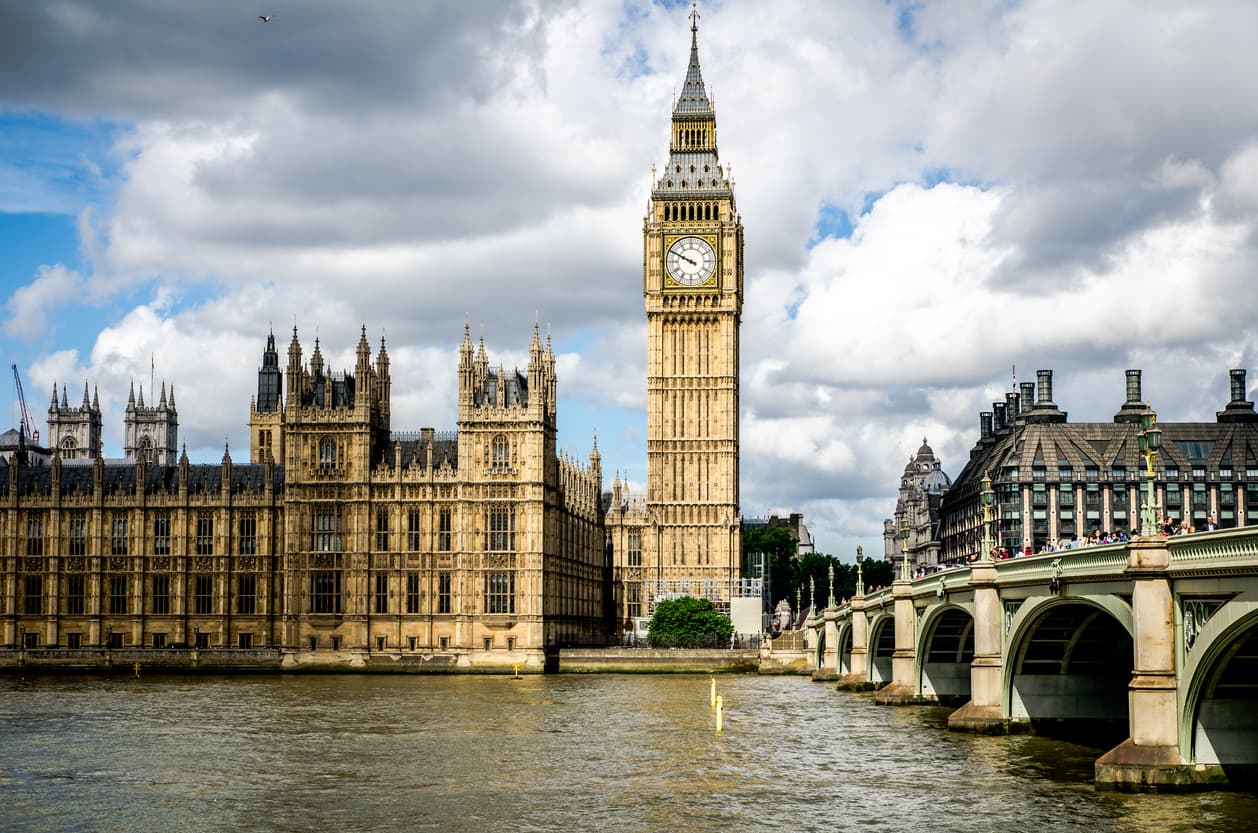
The Chancellor has eleven days to set out how Britain will pay for its priorities. For households, investors and business owners, the question is not simply which taxes might increase on 28 October. It is what those decisions could change afterwards: the income available in retirement, the value passed to a family, the way investments are held and the work required to administer an estate.
John Healey’s first Budget arrives amid higher energy prices, pressure on public services and more expensive government borrowing. Speculation has centred on banks, capital gains, expensive homes and businesses. Meanwhile, significant changes to pensions, savings and property taxation are already scheduled. The distinction matters. A policy being discussed in the newspapers is not the same as a measure that has passed into law.
The most revealing consequences may not be captured by a headline tax rate. Some changes could alter decisions that people make today. Others will add responsibilities for pension providers, executors or employers years after the announcement. Understanding that second layer is essential to understanding what the Budget could mean for personal finances.
Budget 2026: What Is Already Changing – and What Is Still Uncertain
| Already announced or legislated | Under discussion ahead of 28 October |
|---|---|
| Pension inheritance-tax reform, April 2027 | Possible bank surcharge increase |
| Cash ISA changes, April 2027 | Possible additional CGT changes |
| Savings and property-income tax rates, April 2027 | Online marketplace VAT reforms |
| High-value property surcharge, April 2028 | Further business-rates measures |
| Pension salary-sacrifice changes, April 2029 | Energy and fuel-cost support |
The right-hand column lists reported possibilities, not confirmed announcements.
Why the Chancellor is looking for money
The pressure is real, but the much-quoted figure of £35 billion needs explaining. In its Green Budget, published on 12 October, the Institute for Fiscal Studies examined what could be required if ministers protected public-service spending from inflation and met higher defence-spending ambitions. It suggested that, under such a scenario, the Government could need tax increases or reductions in benefits of around £35 billion by 2030–31. [1]
That is not an official declaration that the Chancellor must raise £35 billion in new taxes on 28 October. It is an illustration of the choices facing him. Higher inflation can increase government tax receipts while simultaneously reducing the purchasing power of departmental budgets. Rising gilt yields can add to debt-interest costs. Allowing budgets to be eroded, increasing taxes and borrowing more each carry different economic and political consequences.
This explains why apparently separate proposals are being considered together. A levy on banks might create room for household support. Changes to business taxation could be paired with measures for the high street. Restraint in one area could be used to preserve spending elsewhere. None of these choices removes the need to consider how people and businesses might respond.
Bank tax: who would actually pay?
The clearest live tax debate concerns the bank corporation-tax surcharge. Banks currently pay a 3% surcharge on relevant profits above the applicable allowance, in addition to ordinary corporation tax. Reports ahead of the Budget suggest the Government is considering returning the surcharge to 8%, which supporters estimate could raise around £2 billion a year (the current 3% surcharge raises about £1 billion a year). No decision has yet been announced. [2] [9]
The case for increasing it is straightforward: banks have reported strong profits during a period when higher interest rates have placed pressure on borrowers. The Government could argue that the sector has capacity to contribute more. The competing argument is that Britain depends on banks to finance mortgages, businesses and investment; a higher tax burden could affect their willingness to lend or invest.
But a tax paid by a bank does not automatically become a matching charge on its customers. Some of the cost might be absorbed through lower profits or distributions to shareholders. Banks might change lending prices, but how far they could do so would depend on competition, funding costs, capital and demand for credit. UK Finance has warned of consequences for lending and growth [9]; the IMF has argued that property-tax reform, improvements to VAT and more targeted spending could be better options. Those are competing assessments, not proof of the outcome. [2]
The issue reaches pension savers as well as borrowers. Many diversified funds own bank shares, so lower earnings or dividends could affect investment returns. Equally, a change in one sector’s taxation does not justify an assumption that an individual’s entire pension will perform badly. Asset allocation, geography and investment horizon matter.
Inherited pensions: a tax change with an administrative afterlife
One of the most consequential pension developments is not awaiting this Budget at all. Legislation already provides that, from 6 April 2027, most unused pension funds and pension death benefits will enter the deceased person’s estate for inheritance-tax purposes. Certain death-in-service benefits and other specified benefits are excluded. Spouse and civil-partner exemptions continue to matter. [3]
HM Revenue & Customs estimates that, among approximately 213,000 estates with inheritable pension wealth in 2027–28, around 10,500 will become liable for inheritance tax when they previously would not have been. A further 38,500 estates are projected to pay more. Its estimated average increase in liability among affected estates is around £34,000. These are static estimates and may change as behaviour changes; most estates are still expected to pay no inheritance tax. [3]
The less obvious issue is what families must do to establish the liability. Executors and other personal representatives may need to identify several pension arrangements, contact administrators, obtain date-of-death valuations, establish which benefits are within scope and determine how tax should be apportioned. Pension trustees’ decisions about beneficiaries can be relevant. An individual who moved jobs repeatedly might have pensions held with several different providers, each with its own records and processes.
The system has been designed with some safeguards. HMRC’s August technical note provides for basic information to be supplied within 28 days of a valid request, while further information may take longer if beneficiaries have not been determined. Administrators are expected to share information before a probate grant where the relevant identification conditions are met. There are also mechanisms for withholding some benefits and paying attributable inheritance tax directly from pension arrangements in qualifying circumstances. [4]
Those protections matter. They reduce the risk of an executor having to fund the entire liability from other estate assets before pension money is available. They do not eliminate the work involved. An incomplete request, a late-discovered pension, uncertainty over beneficiaries or a revised valuation can still mean more correspondence between people who are already dealing with bereavement.
HMRC has put figures on that additional work. It estimates £65 million in one-off implementation costs for affected businesses, £5 million in additional annual administration costs and £23 million in its own implementation and operating costs over 2025–26 to 2030–31. These are separate estimates with different time periods, not a single annual bill. [3]
HMRC estimates – pension IHT reform
| Estimate | Figure |
|---|---|
| Estates newly liable for IHT in 2027–28 | 10,500 |
| Existing taxable estates expected to pay more | 38,500 |
| Estimated one-off implementation costs to affected businesses | £65m |
| Estimated additional annual business administration costs | £5m |
HMRC estimates; projections are not realised results and the figures have different units and time periods.
There is a wider question about capacity. Ministry of Justice statistics recorded 47,003 open probate cases in England and Wales at the end of June 2026, 19% more than a year earlier. That does not demonstrate the pension reforms will make probate slower, nor should probate applications be confused with contested court proceedings. Much of the work that could grow is undertaken before an application is submitted: finding accounts, obtaining valuations and preparing a tax return. Whether providers and estate administrators can meet the new demands consistently remains an important unanswered question. [5]
Inheritance-tax liability can also create a liquidity problem. A family may inherit a valuable home and pension wealth without having much accessible cash. The inheritance-tax payment timetable does not automatically wait for every asset to be sold or every administrative question to be resolved, and late-payment interest may apply. Yet the eventual liability will depend on exemptions, allowances, prior gifts, beneficiaries and the particular pension arrangements. A headline percentage cannot tell a family what it will owe.
For readers, the practical lesson is about preparation rather than hurried pension withdrawals. Accurate records, current beneficiary nominations, an up-to-date will, clarity about available cash and coordination between advisers and legal professionals can make a difficult process easier to manage. They cannot remove all taxes or guarantee that an estate will avoid delays.
Savings and investments: the account can matter as much as the asset
Several measures already scheduled for April 2027 change how some savings and investment income will be taxed. For people under 65, the annual Cash ISA subscription limit is due to fall to £12,000, while the overall ISA allowance remains £20,000. Savers aged 65 or over retain a £20,000 Cash ISA subscription limit. Related rules address transfers and attempts to bypass the lower cash limit. [6]
Separately, the income-tax rates applying to savings income are due to rise by two percentage points across the tax bands from April 2027. Property income is due to have separate basic, higher and additional rates of 22%, 42% and 47%. Some dividend tax rates increased in April 2026. These are existing policy decisions, not fresh October rumours. [7]
The implication is that two people holding similar investments could face very different outcomes depending on where the assets are held and how they use their allowances. Cash inside an ISA is not taxed in the same way as interest earned outside it; a taxable investment account differs from a pension; property income has its own rules. Investment bonds also have distinct tax treatment rather than being straightforward substitutes for ISAs or pensions.
There is a risk in turning that observation into a simplistic instruction to move money into shares. Cash may be needed for emergencies, planned expenditure or retirement withdrawals in the near future. Investments can fall in value, and tax advantages are only one consideration. The question is whether the mix of cash, pensions, ISAs and other holdings still serves a person’s financial objectives after accounting for the rules that apply to each.
Capital gains: decisions can change before the tax does
Capital Gains Tax is another area in which the distinction between reporting and policy matters. Reuters reported on 13 October, citing Financial Times reporting, that the Chancellor had ruled out bringing CGT rates fully into line with income-tax rates. That does not constitute a formal guarantee that all CGT rates and reliefs will remain unchanged.
An increase in CGT can affect more than the proceeds of a sale. Somebody thinking of selling an investment property may bring the disposal forward or postpone it. A business owner may reassess an exit timetable. An investor could delay selling an appreciated holding even when their portfolio has become too concentrated. The Treasury, in turn, cannot assume that a higher rate applied to existing realisations will produce the same volume of taxable sales.
Tax uncertainty can therefore influence behaviour before legislation changes. But a sale brought forward solely because of Budget speculation may be expensive if the predicted change never materialises. The appropriate decision depends on the asset, the transaction and the person’s broader circumstances.
High-value homes: wealth is not the same as income
Another change already announced is the High Value Council Tax Surcharge for homes worth at least £2 million in England, scheduled from April 2028. Published plans set annual additional charges of £2,500, £3,500, £5,000 or £7,500 depending on a property’s valuation band. The Government expects the measure to raise around £430 million a year from 2028–29. [8]
Reports that the threshold might fall to £1.5 million have been followed by reporting that the idea has been rejected. The £2 million threshold is therefore the established starting point, while details of the system remain subject to final decisions.
The most revealing problem is not necessarily the charge on the wealthiest homeowners. It is the person who occupies an expensive family home but lives on a much smaller retirement income. A recurring annual charge has to be paid from income, savings or another source of liquidity; the value of the walls does not pay the bill.
The Government has consulted on a possible deferral scheme for eligible owner-occupiers who cannot readily pay, including an approach involving income and savings criteria, interest and a secured charge against the home. Those details are proposals, not a universal entitlement to defer. For some households a deferral could ease immediate pressure while reducing the proceeds ultimately available on sale or inheritance. [8]
This is where a property decision becomes a retirement and estate-planning question. Staying in a family home, downsizing, gifting property or borrowing against it can involve competing financial and personal considerations. A new annual tax is one factor, not a reason by itself to make an irreversible decision.
Business owners: several changes can meet in one financial plan
Business taxation has also featured in pre-Budget reporting. One proposal would extend online marketplaces’ responsibility for collecting VAT from qualifying sellers, with reports suggesting revenue of up to £1 billion that could help fund business-rates relief for high-street operators. The existing VAT rules already impose responsibilities on marketplaces in certain circumstances, so this would be a change to the system, not its invention.
A successful measure could improve compliance and competition for businesses that already pay the tax. It could also create implementation costs and changes in pricing or trading arrangements for platforms and sellers. How those costs are shared would depend on the final scheme.
For a business owner, the relevant financial consequences may accumulate. A change to rates or payroll costs can affect profits and pension contributions. Tax changes can influence dividends and investment income. The timing and taxation of a future business sale can affect how retirement is funded, while inheritance-tax reliefs may matter to succession planning.
There is also a previously announced restriction due in April 2029: the National Insurance exemption for salary sacrificed into a pension is to be limited to the first £2,000 sacrificed each year; amounts above that will attract both employee and employer National Insurance, while Income Tax relief and ordinary employer contributions are unaffected. Employers and employees can still contribute above that figure, but the National Insurance treatment will differ. Again, this is not a new proposal waiting to be announced on 28 October.
State Pension, household bills and the wider investment picture
The Budget may also influence household finances without directly changing pensions or investment tax. Energy-related support, fuel duty and public spending are among the live considerations. Higher inflation could affect living costs and retirement withdrawals, while government borrowing plans could influence gilt yields, wider bond markets and mortgage pricing. None of those outcomes is automatic: global rates, economic growth and market expectations play substantial roles.
The State Pension has its own longer-term policy change. From April 2030 the Government intends to adjust the Triple Lock so that annual increases are at least inflation or 2.5%, with additional uprating where needed to maintain the pension’s established position relative to average earnings. Describing that as the complete abolition of the earnings link would be misleading. Its practical significance for future pensioners will unfold over many years, rather than being settled by a single Budget-day headline.
These interactions help explain why a strong week for the FTSE 100, changes in mortgage rates or a shift in tax policy cannot be treated as independent questions. A diversified retirement plan may combine several types of investment, different tax arrangements and future spending needs. What matters is how those pieces work together over time, not whether one asset or tax shelter attracts the most attention this week.
What should people do before 28 October?
The most important answer may be: avoid making an expensive decision simply to escape an unconfirmed announcement. Accessing pension money can affect tax, future income and potentially the rules applying to later pension contributions. Selling an investment can crystallise a tax liability or remove future growth. Giving away assets can raise questions about affordability, control and inheritance-tax treatment that are not solved by signing a form.
There are sensible preparatory steps that do not depend on forecasting the Chancellor. People can establish what pensions and investments they hold, identify the structures in which they sit, check beneficiaries and wills, understand their expected retirement income and note decisions that are approaching. A business owner may also need to consider the interaction between company finances, pension funding and succession. Those are the foundations of a coherent plan regardless of which proposals survive the Budget.
What happens after the Budget and how The Retirement Office will respond
The Budget will not affect every person in the same way. An investor with several pensions and taxable accounts, a homeowner approaching retirement and a business owner planning an exit could each face a different combination of consequences. That is why judging a change in isolation can produce the wrong answer.
At The Retirement Office, ongoing financial advice involves looking beyond the performance of individual investments. Changes to taxation, pension rules and legislation need to be considered alongside the retirement plans, family circumstances and long-term objectives of the people we advise.
Following the Chancellor’s statement on 28 October, we will assess the relevant announcements and their implications for our ongoing-advice clients. That includes pensions and investments, the investment vehicles and tax wrappers used to hold them, retirement-income arrangements, protection and estate-planning considerations. Where we identify a change that may warrant action for an individual client, we will contact them to explain the implications and discuss the options before any recommendation is implemented.
On Thursday 29 October, we will deliver a full Budget update to our clients, setting out the key measures, their expected commencement dates and the areas that may require further clarification. Clients will also receive a direct link to book a conversation with their adviser at a time that suits them if they would like to discuss their circumstances.
For people who do not currently have an ongoing financial advice relationship, there is a broader question worth asking: who is looking at how changes to tax, pensions, investments and family finances fit together, rather than considering each decision in isolation? This is where long-term planning can add value. It does not remove uncertainty or ensure that every tax change can be avoided, but it creates a process for reviewing what has changed and deciding whether a response is appropriate.
The Budget may produce surprises. It may also confirm that several much-discussed proposals will not happen. Either way, the important financial decisions will continue after 28 October, when the details, legislation and individual consequences become clearer. A sound financial plan should be able to respond to that reality without being rebuilt every time the headlines change.
Sources and references
Institute for Fiscal Studies · Green Budget 2026. Published 12 October 2026. Fiscal pressures, spending assumptions and the conditional £35 billion scenario.
Reuters · Raising Bank Tax Is Not Best Choice for UK Budget, IMF Says. Published 16 October 2026. Latest bank-tax debate and competing economic arguments.
HM Revenue & Customs · Inheritance Tax: Unused Pension Funds and Death Benefits. Official projections, affected estates and administrative cost estimates.
HM Revenue & Customs · Inheritance Tax on Pensions: Technical Note 2. Published 27 August 2026. Executor and administrator responsibilities, information requirements and payment mechanisms.
Ministry of Justice · Family Court Statistics, April to June 2026. Official probate caseload figures and administration context.
HMRC · Cash Individual Savings Account Limit Reduction. Published 17 September 2026. April 2027 limits and implementation provisions.
HMRC · Changes to Tax Rates for Property, Savings and Dividend Income. Official tax treatment and commencement dates.
Government · High Value Council Tax Surcharge Consultation. Published 19 May 2026. Property thresholds, proposed deferrals, valuations and administration.
The Telegraph, via Yahoo Finance · Healey poised to launch raid on banks. Published 15 October 2026. The reported 8% surcharge proposal, its estimated yield and UK Finance's response.
Thanks for reading!
More Posts